“I noticed them,” an Italian friend once told me, “but I wasn’t sure if they were Chinese.” She had been walking past the same bar on her way to work for years.
Across Italy, Chinese-run bars have quietly entered one of the country’s most familiar everyday spaces, from Milan to smaller towns few outsiders could place on a map. Anthropologist Grazia Ting Deng was among the first to trace this shift; In her book Chinese Espresso (2024), she notes that by the late 2010s foreign owners already rannearly 20% of these traditional bars in some northern Italian regions, with Chinese families holding the most visible share. On Via Paolo Sarpi, a neighbourhood shaped by migration and trade for over a century long, the numbers are hard to measure in any official sense, but the change is easy to notice.
Via Paolo Sarpi has never been a static place. From a district of workshops near Milan’s historic centre, it grew through the late 20th century as Zhejiang migrants moved fromsmall-scale manufacturing into global trade; By the 2000s, urban regeneration andpedestrianization reshaped the area again. Today, Sarpi is a landscape often framed, inpolicy documents and on social media alike, as one of the symbols of the city’s openness,a vivid multicultural image of Milan. Yet, in a neighbourhood where parking rules, streetsigns, and the placement of a rubbish bin have all become objects of prolonged dispute,many Chinese-run bars sit at an unlikely intersection. Many Chinese entrepreneurs havetaken over small, thin-margin businesses that a vanishing generation of Italian ownersfound difficult to pass on. But is this only a commercial replacement? Behind the counter, these new owners are not just serving coffee. Gaps can surface from both sides: a customer might still complain after years that “it’s just not like before,” while an owner remains silent behind the machine until spoken to. The question of belonging, understanding and familarity is always on the table, renegotiated daily.
And yet, these bars remain what they have always been: places for a morning coffee, anaperitivo, a football match, or candy bought with exact change after school. They areplaces where neighbours have stood at the same counter for decades. Perhaps within allthis ordinariness, something new is also possible, how about the first place to saybuongiorno to someone you had never spoken to before in your own neighborhood?
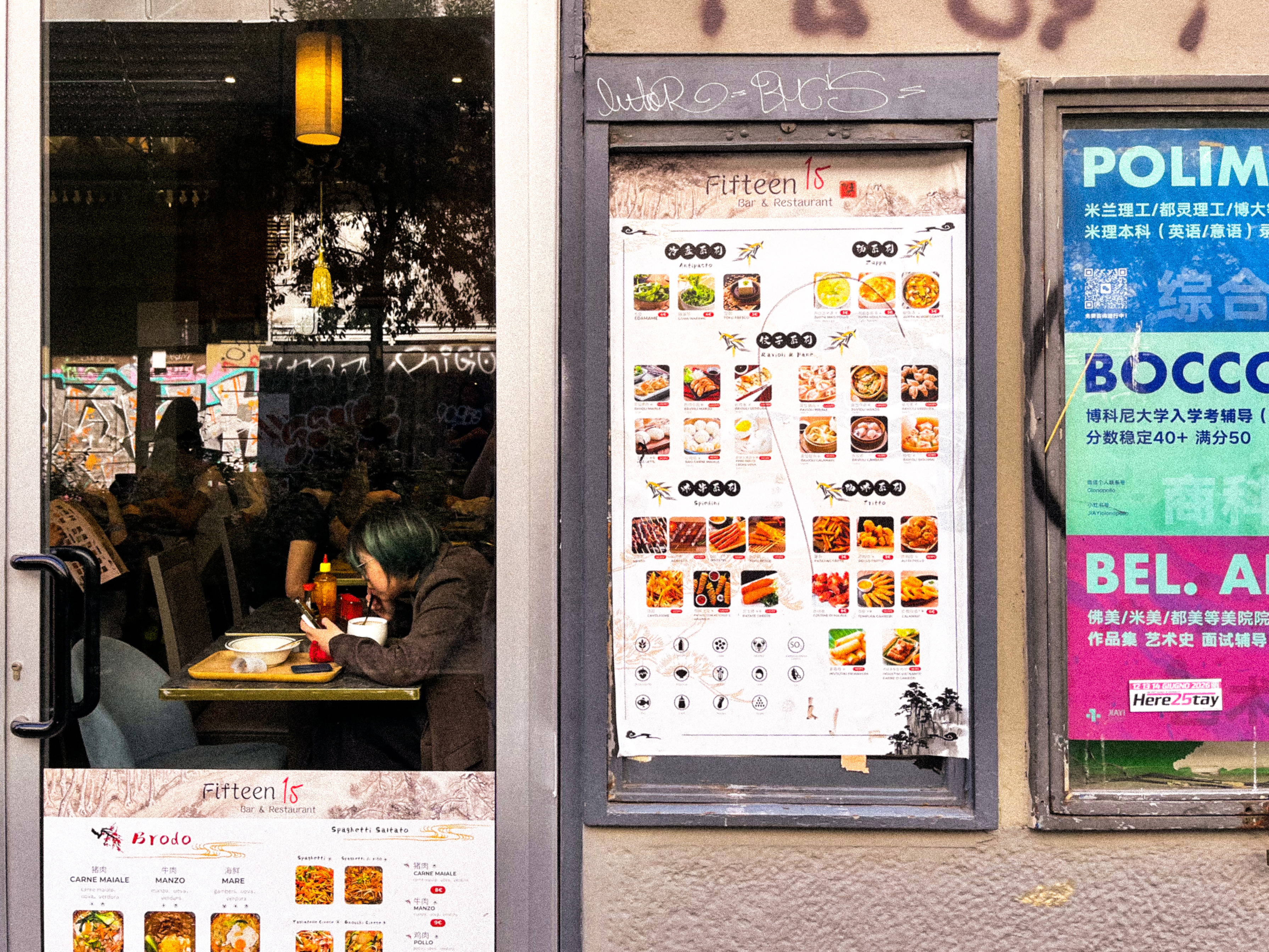
Fifteen Bar N°15 at Via Paolo Sarpi, 15, as one of many Chinese-run bars in the street
that now serve bubble tea and Asian meals, increasingly functioning as all-day restaurants.
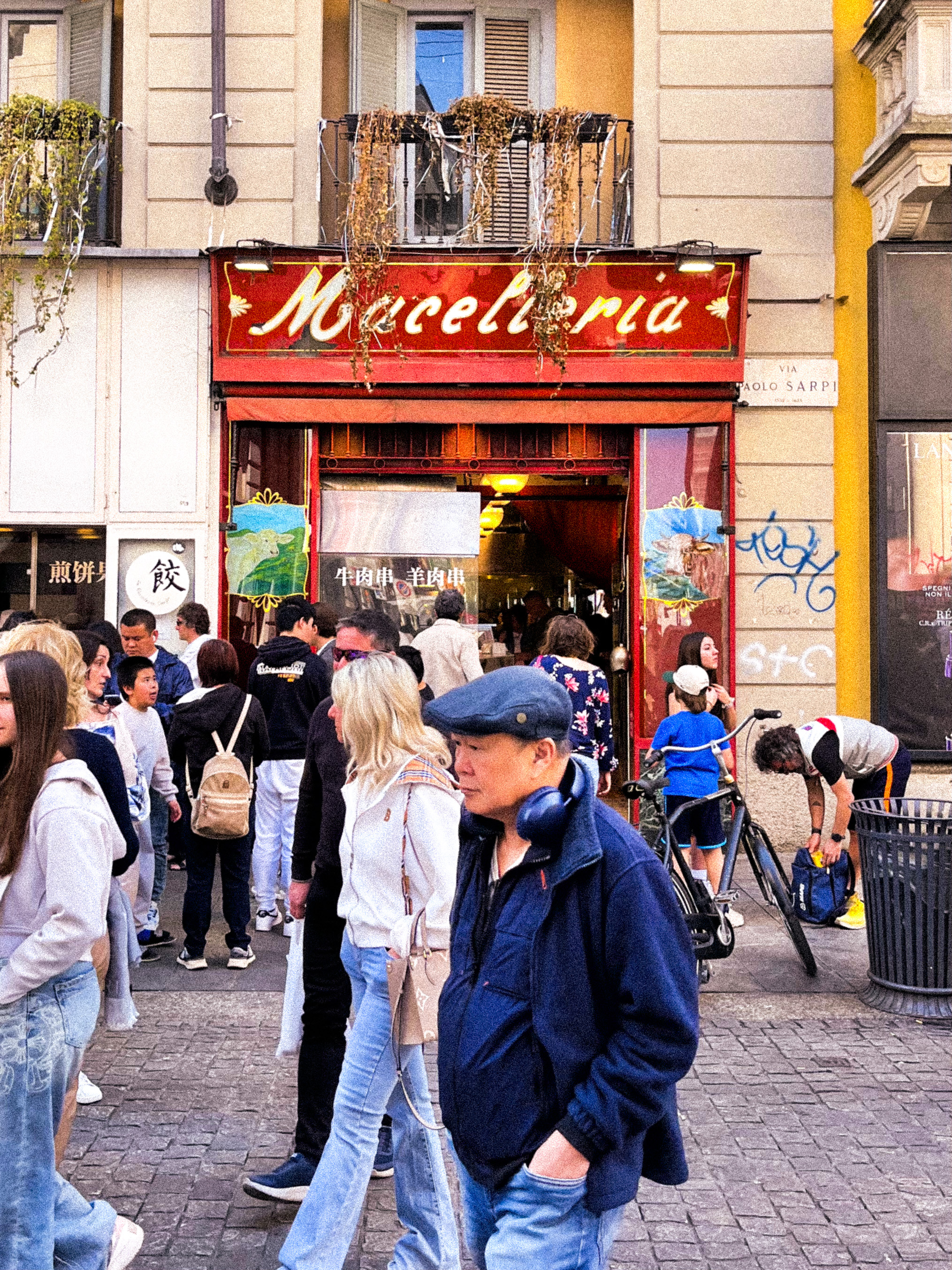
Not only in bars, similar shifts can be found in other local trades. Sirtori Butchery at Via
Paolo Sarpi, 27, maintains its original "Macelleria" sign, while becoming a popular
destination for Chinese-style meat dishes.
“Li avevo notati,” mi ha detto una volta un’amica italiana, “ma non ero sicura che fosserocinesi.” Da anni passava davanti allo stesso bar andando al lavoro.
In tutta Italia, i bar a gestione cinese sono diventati una presenza sempre più familiare in uno degli spazi quotidiani più riconoscibili del Paese, da Milano fino ai piccoli centri chepochi forestieri saprebbero collocare sulla mappa. L’antropologa Grazia Ting Deng è statatra le prime a descrivere questo cambiamento. Nel suo libro Chinese Espresso (2024) osserva che già alla fine degli anni Dieci i proprietari stranieri gestivano quasi il 20% di questi bar tradizionali in alcune regioni del Nord Italia, con le famiglie cinesi tra i gruppi più visibili. In Via Paolo Sarpi, un quartiere plasmato da migrazioni e commerci da oltre unsecolo, i numeri ufficiali sono difficili da stabilire, ma il cambiamento è sotto gli occhi di tutti.
Via Paolo Sarpi non è mai stata un luogo statico. Da distretto di laboratori artigianali vicinoal centro storico di Milano, ha iniziato a trasformarsi alla fine del XX secolo, quando imigranti dello Zhejiang sono passati dalla piccola manifattura al commercio all’ingrosso.Negli anni 2000, la rigenerazione urbana e la pedonalizzazione hanno rimodellato l’areaancora una volta. Oggi Sarpi è spesso presentata, nei documenti politici e sui social media, come uno dei simboli dell’apertura della città: un’immagine vivida della Milano multiculturale. Eppure, in un quartiere dove le regole del parcheggio, la segnaletica stradale e persino la posizione di un cestino dei rifiuti diventano oggetto di lunghe discussioni, molti bar a gestione cinese si trovano in una posizione particolare. Molti imprenditori cinesi hanno rilevato attività piccole e dai margini ridotti che una generazione di proprietari italiani ormai vicina alla pensione faticava a tramandare. Ma si tratta solo di una sostituzione commerciale? Dietro il bancone, questi nuovi proprietari non servono solo caffè. Possono emergere distanze da entrambe le parti: un cliente potrebbe ancora lamentarsi, dopo anni, che “non è più come prima”, mentre un proprietario resta in silenzio dietro la macchina del caffè finché non interpellato. Questionidi appartenenza, comprensione e familiarità restano sempre sul tavolo, rinegoziate ogni giorno.
Eppure questi bar rimangono ciò che sono sempre stati: luoghi per un caffè mattutino, un aperitivo, una partita di calcio o caramelle comprate con gli spiccioli in tasca dopo la scuola. Luoghi dove i vicini si fermano allo stesso bancone da decenni. Forse, dentro tutta questa ordinarietà, qualcosa di nuovo è possibile: e se fosse il primo posto dove dire buongiorno a qualcuno con cui non avevi mai parlato prima, nel tuo stesso quartiere?